
Dr Arndt Faatz MBA
Drawing on experiences and insights
2000-2025
© Dr Arndt Faatz www.videant.eu
Article 1: The Tokenization Revolution – From Cowrie Shells to Digital Ledgers
Back to Basics
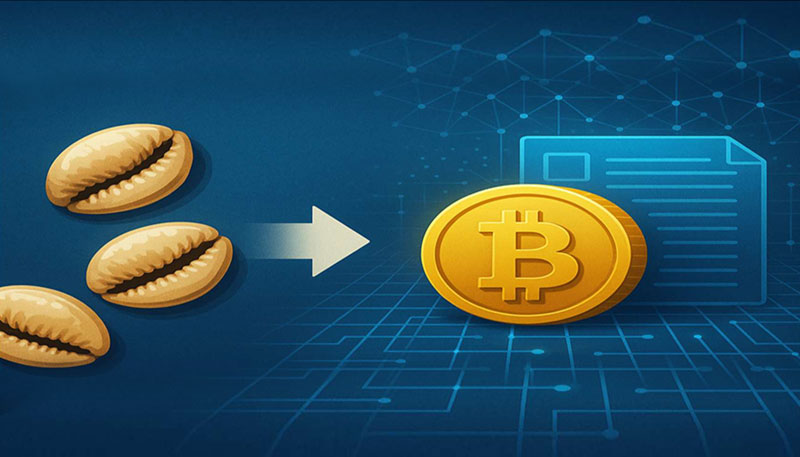
The future of money looks remarkably like its ancient past. When our ancestors used cowrie shells for commerce thousands of years ago, they understood something fundamental: value could be represented by a token that everyone trusted. Today’s tokenization revolution brings this peer-to-peer simplicity into the digital age, but with profound implications for how we structure financial markets.
During my tenure at DEPFA Bank, where I built a $4 billion investment-grade synthetic asset book, I witnessed firsthand how financial innovation can transform markets. The structured credit derivatives we created – from first-to-default baskets to credit-linked notes – were early examples of how traditional assets could be repackaged and traded in new forms. Today’s tokenization takes this concept to its logical conclusion: any asset can become a programmable, instantly transferable digital token on a shared ledger.
The Promise of Atomic Settlement
Tokenization fundamentally addresses the settlement frictions that plague traditional markets. Having managed the restructuring of complex infrastructure facilities in Italy and French commercial real estate portfolios at FMS Wertmanagement, I experienced how settlement delays and counterparty risks compound complexity. A €180 million restructuring could take weeks to settle through multiple intermediaries, each adding cost and risk. Programmable ledgers offer atomic settlement – the simultaneous and instantaneous exchange of assets and payment. This isn’t merely faster; it eliminates entire categories of risk. J.P. Morgan estimates that immediate settlement could reduce asset management costs by a fifth. I can tell from experience in FMS Wertmanagement and MUFG that for institutions managing billions in assets, such efficiencies do represent transformational change.
Learning from History’s Cycles
Yet history offers cautionary parallels. The rise of privately issued stablecoins mirrors America’s chaotic Free Banking Era of the 19th century, when numerous private banks issued their own notes. These often failed to trade at par value, creating the very confusion that central banking was designed to solve. I for one have vivid memories of trying to implement meaningful regulatory compliance across multiple jurisdictions, when financial innovation without proper oversight tended to recreate problems we thought we’d solved – there was at least one Groundhog Day per week.
The composability of tokenized assets – their ability to be combined and reused in complex arrangements – offers immense potential. But having lived through the 2008 crisis in a bank that actually failed, when I witnessed firsthand how interconnected synthetic structures could amplify systemic risk, I recognize that innovation must be balanced with prudent risk management. The question isn’t whether to embrace tokenization, but how to harness its benefits while learning from past mistakes.